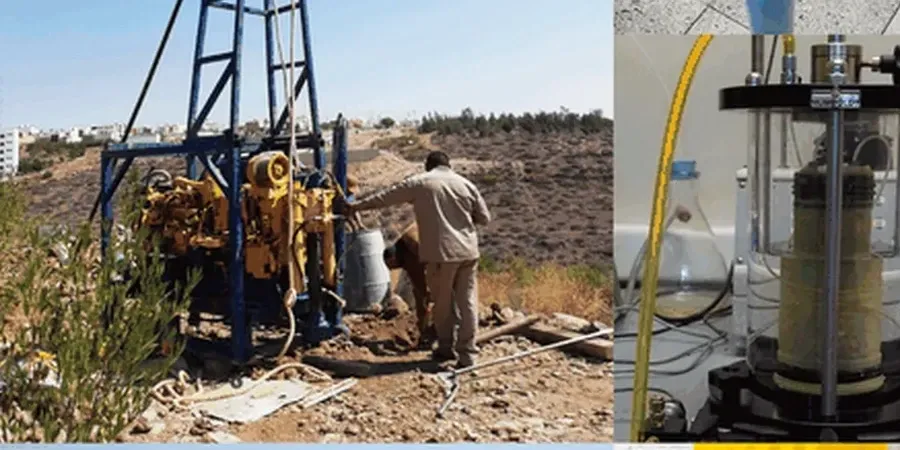
Ground improvement is a critical category of geotechnical engineering that focuses on modifying the mechanical and hydraulic properties of existing soils to meet project performance requirements. In Anaheim, where urban development often intersects with variable subsurface conditions, effective ground improvement ensures the stability and longevity of structures, roads, and utilities. This category encompasses a range of specialized techniques, including Deep Soil Mixing (DSM) design, Grouting design, and Jet grouting design, each tailored to address specific soil challenges such as low bearing capacity, high compressibility, or liquefaction potential.
The local geology in Anaheim is characterized by alluvial deposits from the Santa Ana River and adjacent floodplains, consisting of interlayered sands, silts, clays, and gravels. These soils often exhibit variable density and moisture content, with shallow groundwater tables that can complicate construction. Seismic considerations are paramount due to California's active fault systems, including the nearby San Andreas and Whittier faults. Ground improvement methods like Vibrocompaction design are frequently employed to densify loose sands and mitigate liquefaction risks under seismic loading.
All ground improvement designs in Anaheim must comply with the California Building Standards Code (Title 24), which incorporates the International Building Code (IBC) with state-specific amendments. Additionally, local municipal codes from the City of Anaheim may impose requirements for site-specific geotechnical investigations and performance criteria. The California Geological Survey (CGS) provides seismic hazard maps that influence design parameters for improvement techniques, particularly for projects in Seismic Zone 4.
Projects requiring ground improvement in Anaheim include commercial developments, residential subdivisions, transportation corridors, and utility infrastructure. For example, Preloading design without surcharge is commonly used for warehouse slabs on compressible clay layers, while Preloading with surcharge design accelerates settlement for larger structures. Landfills and brownfield redevelopment sites often necessitate specialized Landfill geotechnics to manage waste containment and leachate control.
The most common techniques include vibrocompaction for densifying loose sands, deep soil mixing for stabilizing soft clays, and jet grouting for creating impermeable barriers. Preloading with or without surcharge is also frequently applied to reduce post-construction settlement in compressible soils.
Seismic activity requires designs to address liquefaction potential in loose, saturated sands. Techniques like vibrocompaction and deep soil mixing are often specified to densify soils or improve shear strength, ensuring foundation stability during earthquakes. Designs must comply with California seismic hazard maps and building codes.
Shallow groundwater tables in alluvial deposits can complicate construction by affecting soil behavior and dewatering requirements. Ground improvement methods such as grouting or jet grouting may be used to control water flow and stabilize soils, while preloading designs must account for pore pressure dissipation rates.
Yes, all projects must adhere to the California Building Standards Code (Title 24) and local Anaheim municipal codes. These regulations require site-specific geotechnical investigations, performance testing, and documentation to verify that improvement methods meet safety and durability standards.